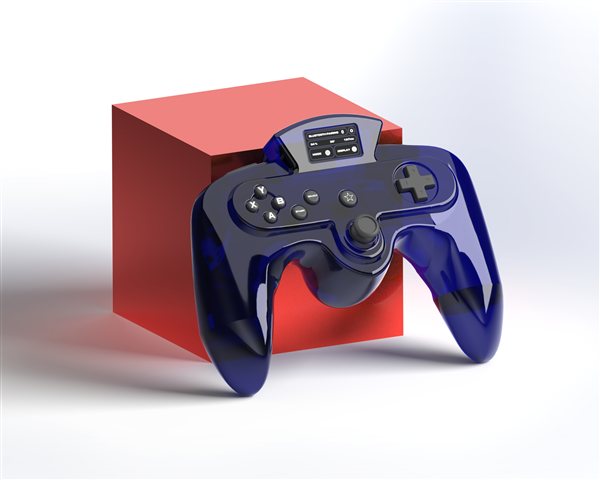
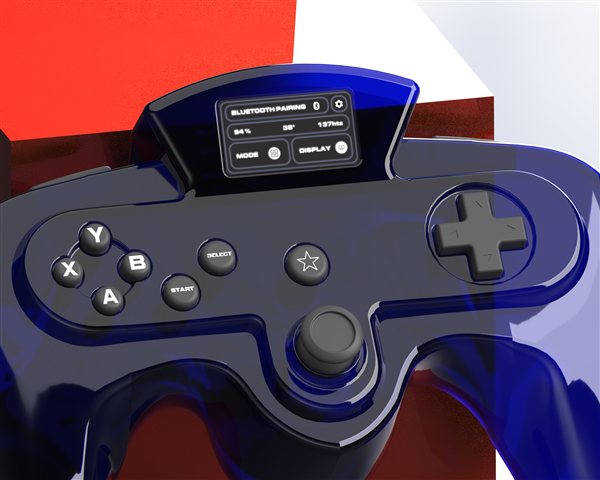
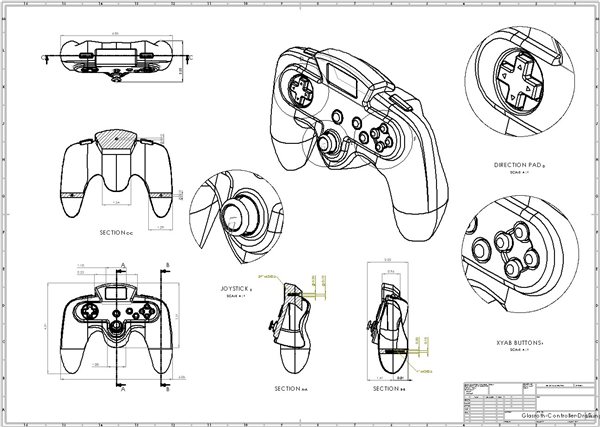
The N64 Controller CAD Redesign is an advanced 3D modeling project focused on re-engineering a vintage gaming icon for modern ergonomic standards. Using SolidWorks, the project documents the evolution of a complex organic form across three distinct modeling iterations. The primary goal was to resolve the geometric pinching and surface discontinuities associated with the original controller's three-handle layout, eventually transitioning to a sophisticated piecewise construction method that allows for complete control over curvature and aesthetic flow.
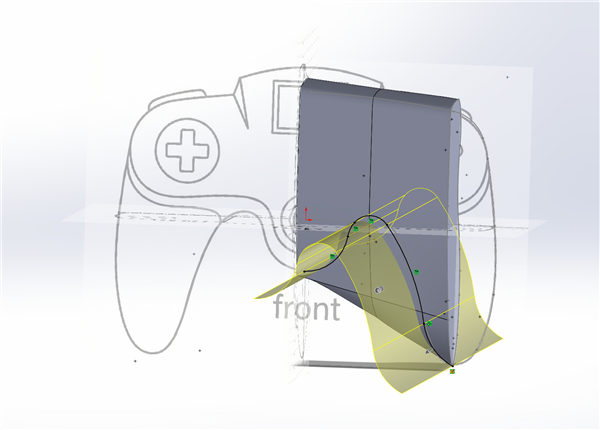
Iteration 1: Single Loft
Attempted to create the primary grip using a single lofted feature across the entire handle profile. The workflow exposed major pinching at the apex and lacked the curvature control needed for a refined ergonomic silhouette.
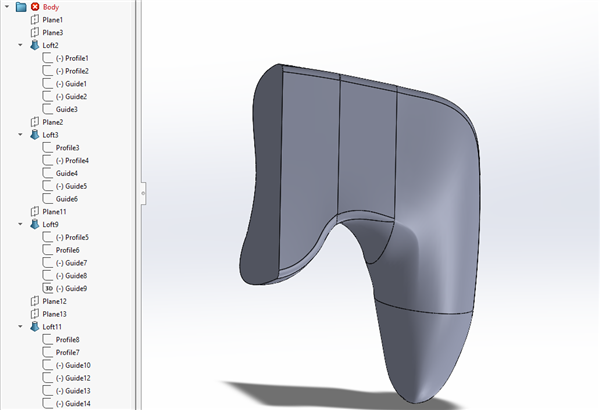
Iteration 2: Split Profiles
Introduced split-profile strategies to better manage the transition between palm rest and trigger housing. This reduced the most visible pinching but still struggled with the complex junction where all handles meet the central body.
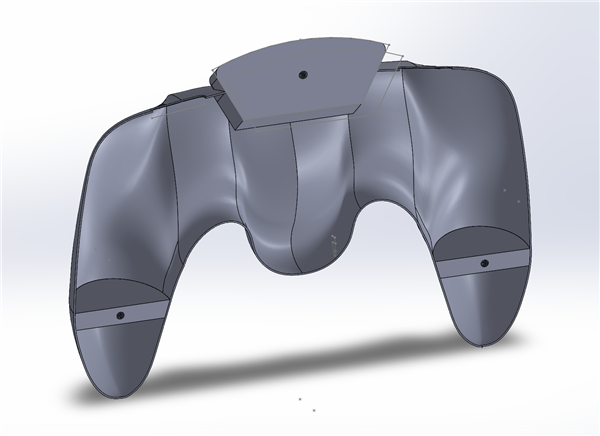
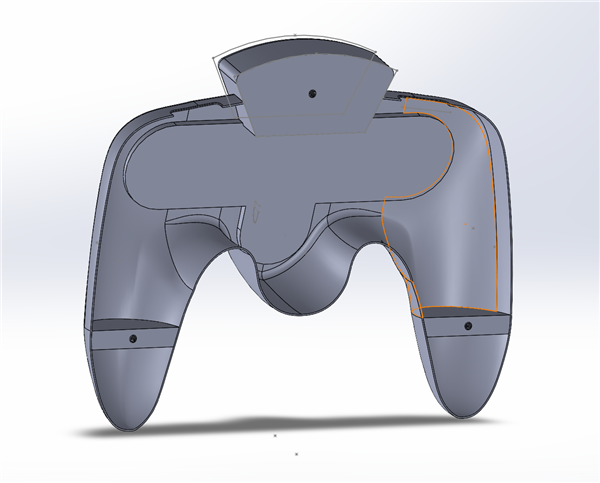
Iteration 3: Piece Construction
Transitioned to a piecewise method, isolating each zone and knitting them into a solid body. This approach delivered maximum geometric control, seamless transitions, and a cleaner integration path for trigger and shell details.
The Design Challenge
The primary challenge was Curvature Continuity. The N64 controller's unique silhouette is notoriously difficult to replicate in parametric CAD while preserving smooth, believable surface flow through every grip transition.
The Solution:
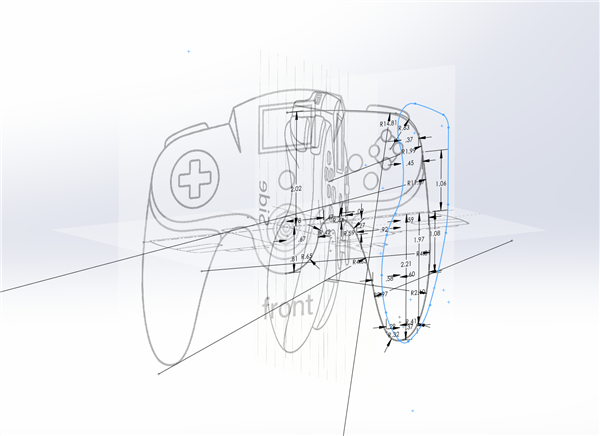
Sketch Modeling: Developed a 1:1 scale sketch model to validate key measurements against hand-proportion data before digital construction.
Advanced Surfacing: Used boundary surfaces and filled patches in SolidWorks to resolve transition zones while maintaining curvature continuity across the entire shell.
Reflections
This redesign demonstrates the value of an iterative industrial design process. By moving away from one-shot lofting and toward staged surface construction, the project achieves stronger manufacturable form language while preserving the identity of a beloved legacy controller.